
Ad

Wind and the Yurt

Dan R-M

New member
Hey all.
I'm going to start a few threads at once, since we're getting much closer to buying another yurt. This one's about wind.
I notice there are a few companies (or maybe just Pacific and Colorado) that have high wind kits available, and I need a little perspective on this point. What experiences have you had with wind?
I remember a few people posting from the east around hurricane time last year that all was well for them. Did you take anything into account when building or buying your yurt?
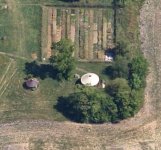
We have occasional projections of wind gusting up to 60 mph (I don't have a meter, so I don't know what we actually get), and only a partial windbreak for our site. Included is a photo of our pre-collapsed yurt I got with our ladder last year. It shows a windbreak on the south and east. The wind comes whipping through from the southwest in the gap between southern windbreak and Walnut tree to the west.
I'd appreciate any thoughts, especially those around "what situations truly call for a wind kit", and "what situations can a yurt take, easy".
 

Attachments

  • yurt screengrab.jpg
    yurt screengrab.jpg
    50.9 KB · Views: 6,626
Hi Dan,

Although the yurt is an aerodynamic shape it is best to plan for the "worst case" at your site. Based on what you've said I would recommend adding the Snow & Wind Kit. Simply think of it as "cheap insurance". Our Snow & Wind Kit adds a lot of rigidity to the structure by connecting the rafter, lattice wall and floor together, but also distributes roof forces between the rafters. If cost is a big factor for you we also offer a "hardware only" package, so you can make your own rafter supports (studs). The rafter supports also come in handy when building shelves or interior walls. I hope this helps.

-Pacific Yurts
 
Yes, that is helpful. I just assume that everyone has storms with that kind of gust, if only once a year or so. But now that I think of it, I suppose that isn't necessarily true at all.
 
Hey Dan,

I have two Pacific Yurts and we live/lived in a high wind/storm/tropical storm/hurricane/high wind/seasonal storm/every-single-day-wind place... haha. not kidding.

I decked our Yurts out with the snow and wind kits and center pole (center pole might be overkill for some people... but its a huge investment overall and our climate was extreme... so it seemed reasonable because of that.

As much as I'm sure a Pacific Yurt could stand up to most anything... I never regretted any part of the extras. The constant wind isn't what concerned me... it was the gusting high winds that literally RIP at any house and make the glasses in the cupboards rattle... its hard enough to endure that in 4 normal walls... in a Yurt its just nice to know its good and anchored.

If where you live has any propensity toward having 'weather' it would be good and better to be safe than sorry. Plus when you're sitting there in a storm or the wind is gusting really strong and your walls are flapping and its sometimes really loud... its easier to ignore and continue on with life when you know you've done everything to make it stand and you don't need to worry... otherwise you sit there waiting for it to lift off haha.

I recently moved to southern BC... and this is about the only climate/area that anyone could get away without having all the extras anywhere in Canada.
 
I lost my first hand built yurt last february, a 14'er, due to extreme windsin a snow storm. The wind literally picked it up and tossed it 25 yards. It landed on the roof and was blown to smithereens. Totally destroyed.

Make CERTAIN your yurt is anchored solidly.
 
The 16'er I just finished isn't going anywhere. I poured ten sackrete anchors around the outside perimeter of the yurt, just outside the yurts footprint, and flush with the ground. Each anchor has an 8" length of 3/8ths chain embedded in it, with half the last link protruding above the surface. I ran 1/8" vinyl coated wire through the exposed chain loops and cable clamped the wire ends. That way I can anchor off anything around the perimeter to that wire.

Inside, directly below the roof ring, I placed a two bag sackrete anchor with the same chain link setup. I stung 1/8th cable through the eight screw eyes in the roof ring, and down to the ground anchor. The screw eyes also anchor the yurt cover at the smoke hole. The wood stove sits on top of that concrete, and the anchor cable runs adjacent to the stove pipe. By the way I have a dirt floor. I'm into primitive. lol

This yurt isn't going anywhere. I got a good ten full days building it and I ain't losin this one to no stinkin wind. ;D
 
You got to get just a little less primitive and snap some pics of that! lol, would love to see that setup! :)
 
Is there a detailed link on how to post pics here? I am computer illiterate on such matters. Thanks.

Off to pound nails. Later, Bob
 
No offense to anyone here but I have a 30ft yurt professionally built platform etc. French doors the whole nine yards with the snow and wind kit and yes the structure itself might be able to handle high winds but the side cover the dome the roof etc is literally not. I live on the open Mojave desert winds reach 100mph sometimes my yurt doors were flying open and side cover ripping out of the door frame in literally 40 mph winds. Our dome only a matter of time until it gets ripped off even with extra springs. I’m not sure they even actually test these things in high winds and I’m not sure how the hurricane lady had such a great experience but I’m giving it to you straight. I don’t even feel comfortable leaving my yurt when it’s windy.
 
No offense to anyone here but I have a 30ft yurt professionally built platform etc. French doors the whole nine yards with the snow and wind kit and yes the structure itself might be able to handle high winds but the side cover the dome the roof etc is literally not. I live on the open Mojave desert winds reach 100mph sometimes my yurt doors were flying open and side cover ripping out of the door frame in literally 40 mph winds. Our dome only a matter of time until it gets ripped off even with extra springs. I’m not sure they even actually test these things in high winds and I’m not sure how the hurricane lady had such a great experience but I’m giving it to you straight. I don’t even feel comfortable leaving my yurt when it’s windy.

Thanks for sharing these experiences.

For me is the conclusion of your lines, that Mongols & Kazaks did right to reduce doors and windows on a minimum. ;)

The design of modern Yurts has to make compromises for increasing comfort & living atmosphere.

And nearly each building has its weaknesses in wind situations or with snow loads....
 
Our door was actually off in our frame while our frame was perfectly square and level so a new half door is on the way to fix the one that is not lining up hopefully this will fix our problem thanks to Pacific Yurts for being quick to catch this and offer to send us a new half door. Hopefully this resolves all the problems.
 
thanks to Pacific Yurts for being quick to catch this and offer to send us a new half door. Hopefully this resolves all the problems.


I tend to think that is one reason why they lead the pack for architectural yurts. Not only do they have an outstanding product, but they realize that is only half the game. They go above and beyond to take care of their current and future customers.

They are by all means not the only ones who do that, but it my years of experience watching people buy yurts on here, they do it the most consistently from my angle of view.
 
I couldn’t agree more it was a matter of sending a picture of the door and they pointed out the problem and offered to replace the half door to get the proper seal. So simple, so easy, great customer service they know their product well.
 
That's good to hear.

You could build a 90 degree ell shaped wall to the windward side of your yurt. Face the 'point' of the ell into the prevailing wind, and run the walls out far enough to form a barrier. Of course this would take time and money, but a barrier would protect your yurt from being destroyed by 100 mph wind.

I estimate my 16' yurt probably survived 80 mph wind but 100 would surely have destroyed it. Fortunately our neighbor built a 30x40 pole barn about 50 feet from the yurt and that acts as a wind break.

Good luck.
 
I live in a high wind area. Wild arctic storms come through frequently. I have ropes over my yurt to tie it to the platform. I have large U-bolts that connect the lattice to the platform. Both were suggested to me by the yurt manufacture. They also suggested putting in rebar posts down below the frost line and running guy lines from the bars to the yurt. I haven't done that nor felt the need to do that. My plan should a larger than usual wind storm come through here is to do run cable from the center ring down to jerry cans of water or directly to the floor.
 
I lost my first 14' yurt in a blizzard due to not anchoring it. Wind picked the yurt up and pitched it 25 yards. Eight full days of work blown to smithereens.

Next yurt, the 16'er, was solidly anchored to the ground. I dug out and poured ten concrete piers flush with the ground, equidistant around the outside perimeter of the yurt wall. Each pier has an eyebolt embedded in the concrete. 3/16ths plastic coated cable runs through the eyes. The cable ends were clamped together just like the upper wall tension cable.

The perimeter cable allowed me to anchor the yurt bridle solidly to the ground. Our lot is basically sand and stakes don't hold here. I also lashed the loops I sewed into the edge of the cover, to the cable as well. All that lashing looked stupider than hell, but the yurt didn't budge in the wind.

Then within a year I built a 16' platform and ell bracketed the yurt wall lattice to the platform. That was definitely the best system of all. The online photos show my 16' yurt anchored in that configuration.

Now I have a 10x12 barn shed with small loft on the platform. Much as I liked my yurts, I like that shed a whole lot more. Way more practical for me now.
 
Last edited:
Back
Top